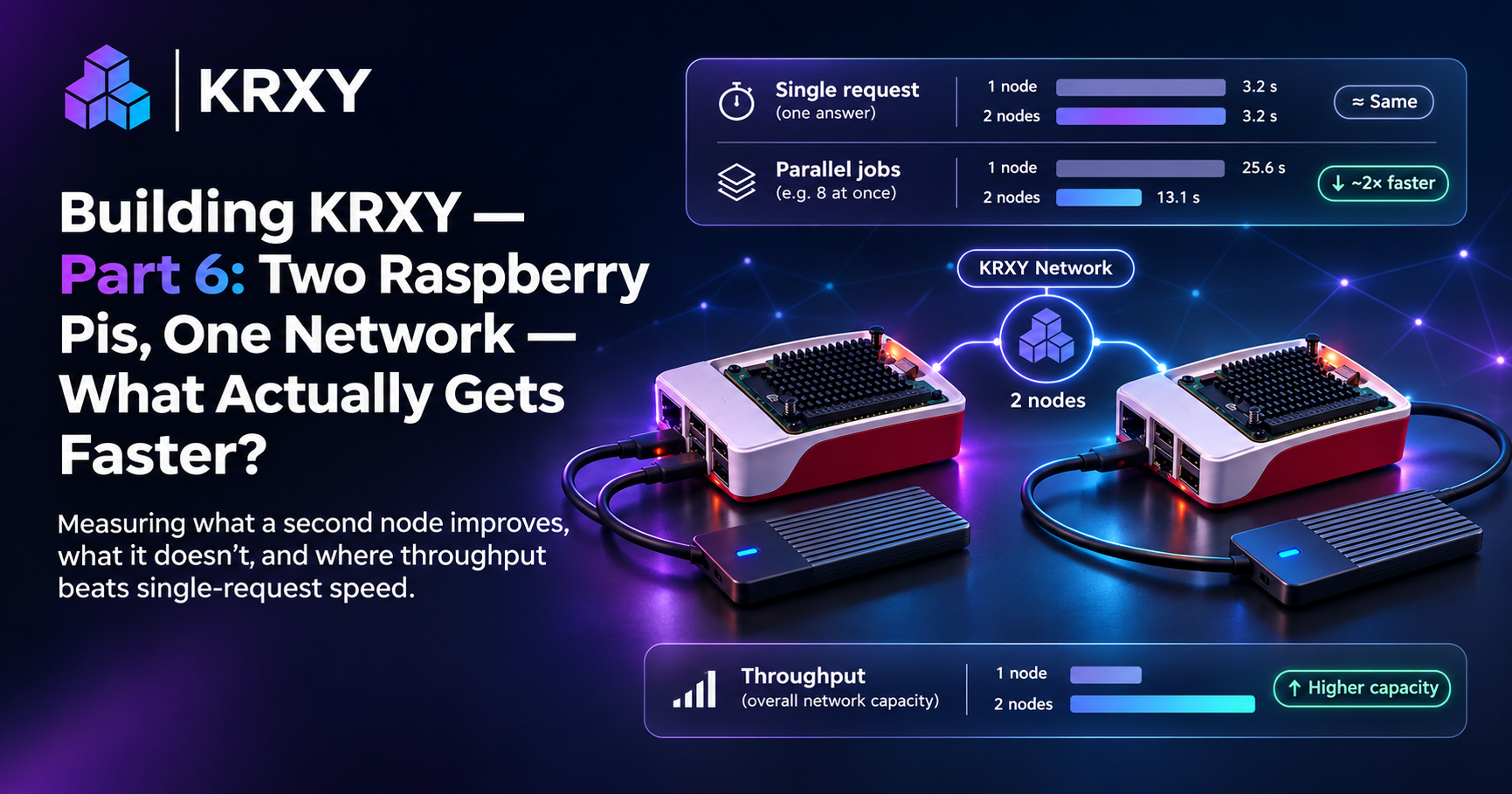
Building KRXY — Part 6: Two Raspberry Pis, One Network — What Actually Gets Faster?
28–29 October 2026: adding a CPU-only node, measuring parallel inference, tracking thermal limits and learning why two workers do not make one answer faster.
A development journal for KRXY, an experiment in whether inexpensive Raspberry Pi nodes can form a decentralised AI network. Posts follow the work in order: the original plan, the hardware, what gets built, what fails, and what is actually measured.
28–29 October 2026: adding a CPU-only node, measuring parallel inference, tracking thermal limits and learning why two workers do not make one answer faster.
26–27 October 2026: model evaluations, a 3B hold-out, the node model library, and an incomplete response that exposed the output limit.
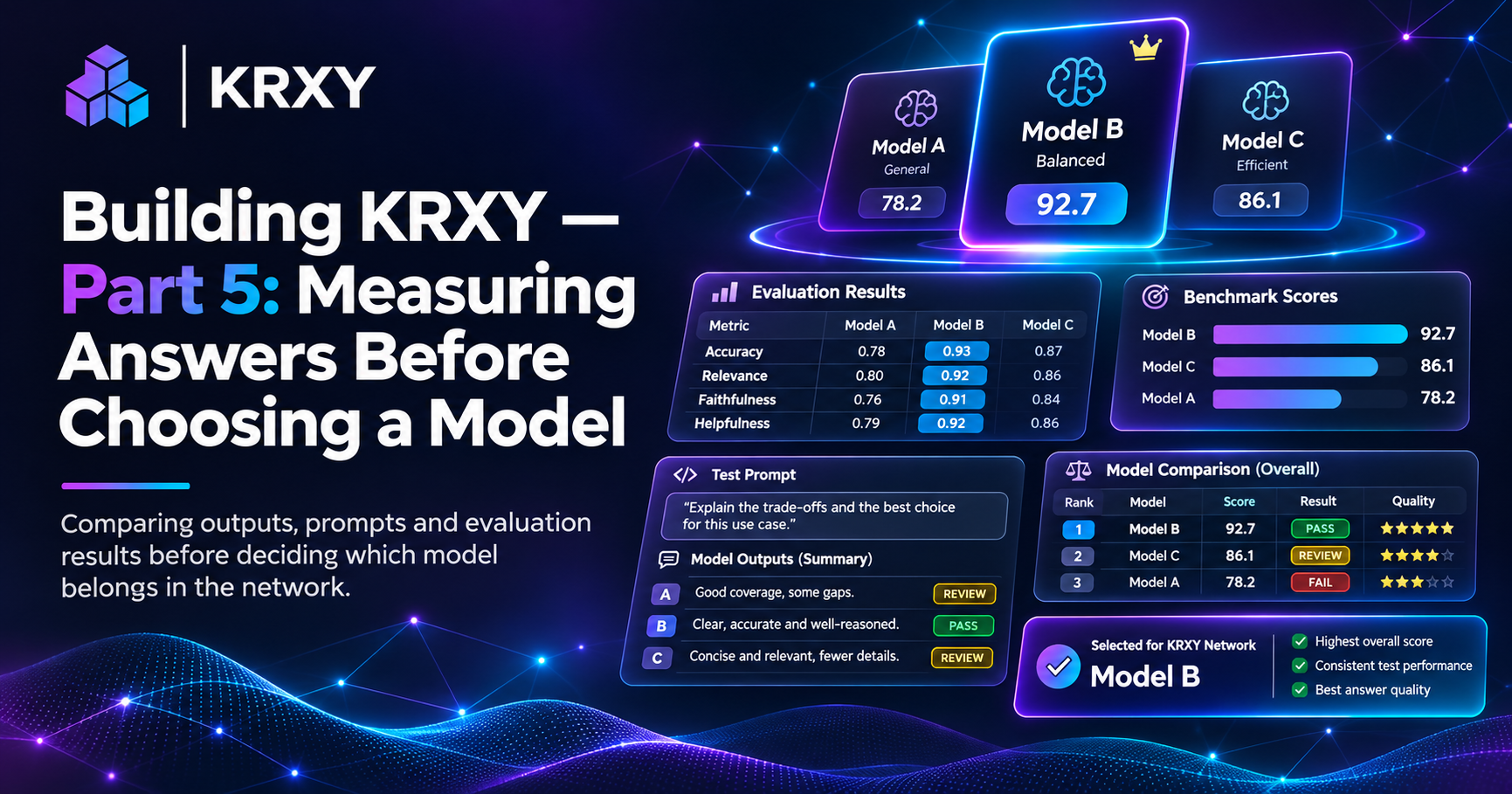
25 October 2026: moving from a node's model claim to exact, capability-aware job placement.
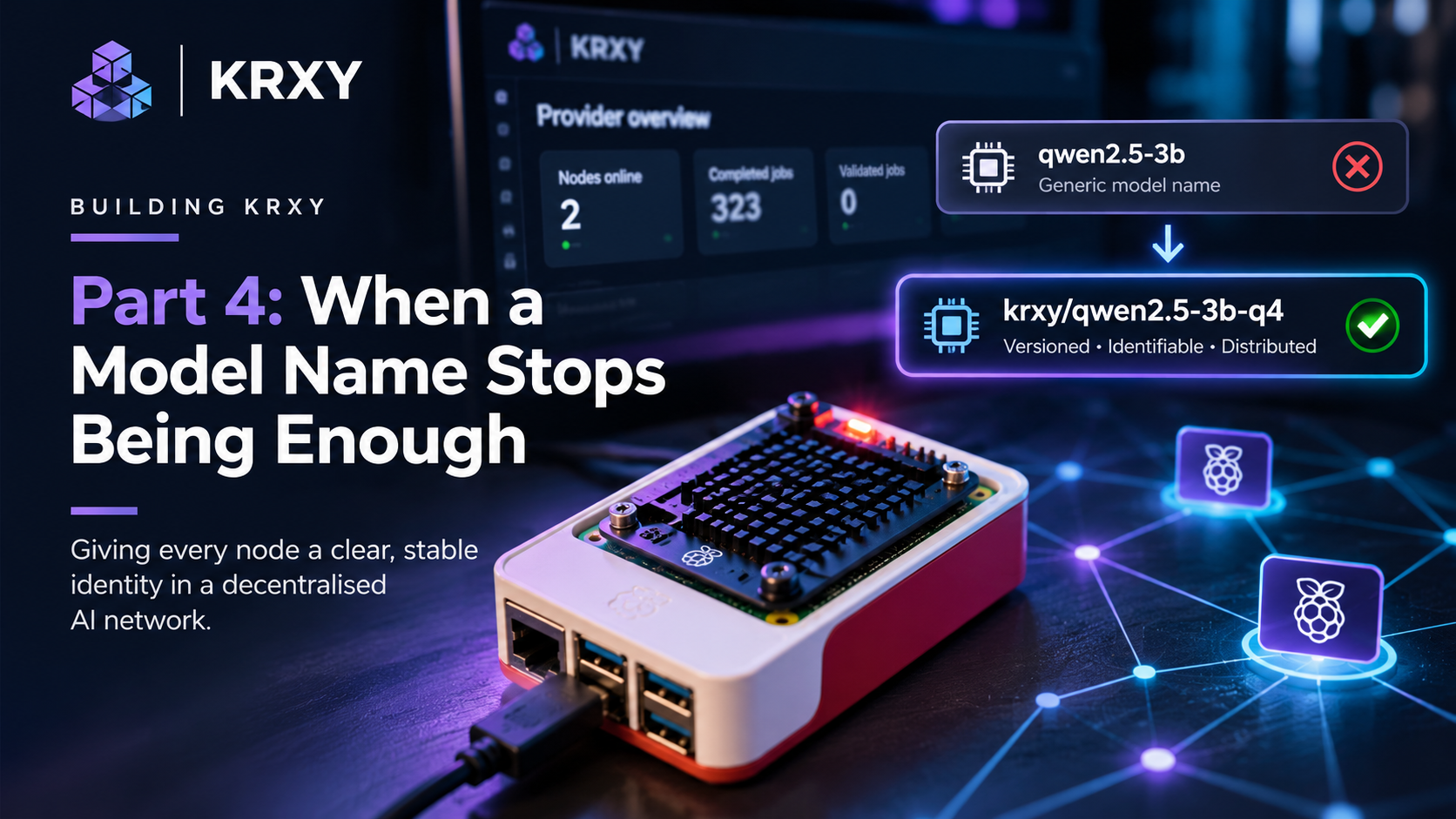
What the agent reports, what a heartbeat is allowed to mean, and how the first node kept one name across a restart.
What the first Pi, the Hailo accelerator and its USB boot disk actually did on 24 October 2026.
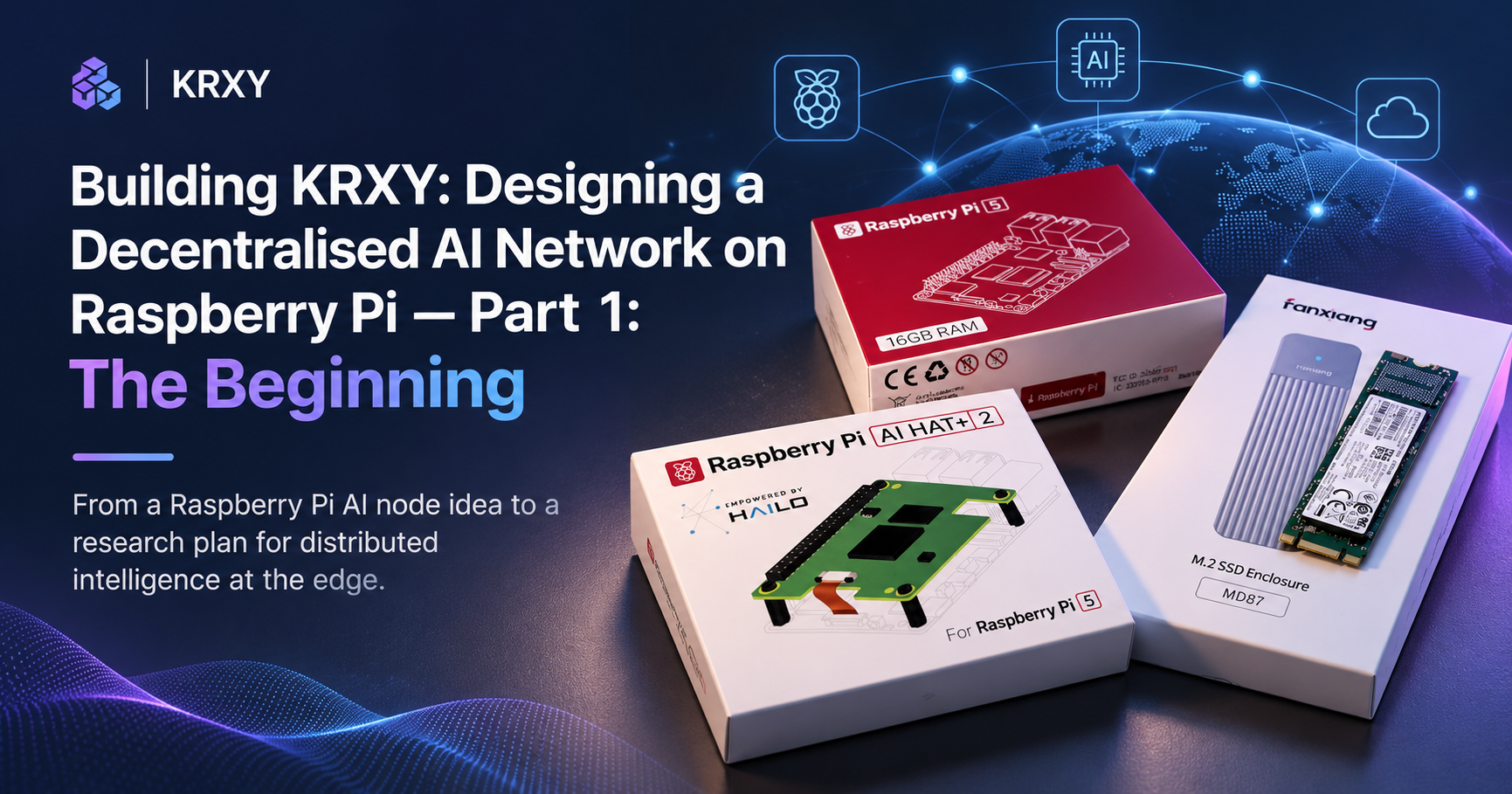
From a Raspberry Pi AI node idea to a research plan for distributed intelligence at the edge.